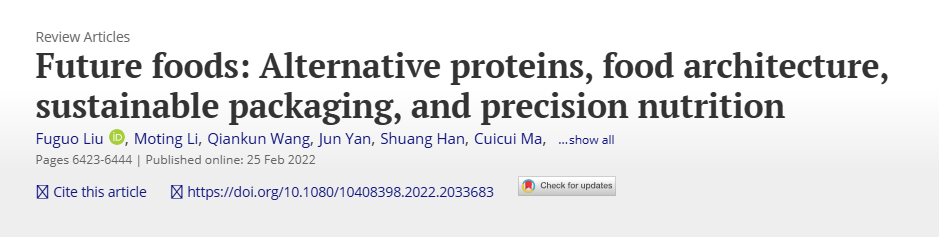
Abstract: The modern food and agriculture industry faces numerous urgent challenges, including feeding a growing global population, mitigating and adapting to climate change, reducing pollution, waste, and biodiversity loss, and safeguarding human health. At the same time, food should also be safe, affordable, convenient, and delicious. The latest achievements in science and technology are being applied to address these issues. Several key elements of this modern food design approach can be summarized as the "MATCHING" model: Meat reduction; Automation; Technology-driven; Consumer-centric; Health; Intelligent; Novel; and Globalization. In this review article, we focus on four key aspects crucial for developing a new generation of healthier and more sustainable foods: emerging ingredients; structural design principles for creating innovative products; the development of environmentally friendly packaging; and precision nutrition with food customization. We also highlight some of the most important new technological advancements used in developing future foods, including food architecture, synthetic biology, nanoscience, and sensory perception.

Future Food: Alternative Proteins, Food Structure, Sustainable Packaging, and Precision Nutrition .pdf