Research & Academic
This section draws on NGRI (NutriGenetic Research Institute)publicly published research materials to explain the academic origins of the FGA functional genomic analysis system. The hypotheses, pathways, and research credentials cited are publicly available at the research level,and do not constitute diagnostic or therapeutic guidance。
The Holmes Cycle Hypothesis
Mechanistic hypothesis proposed by NGRI · The following four passages are direct translations from the original text
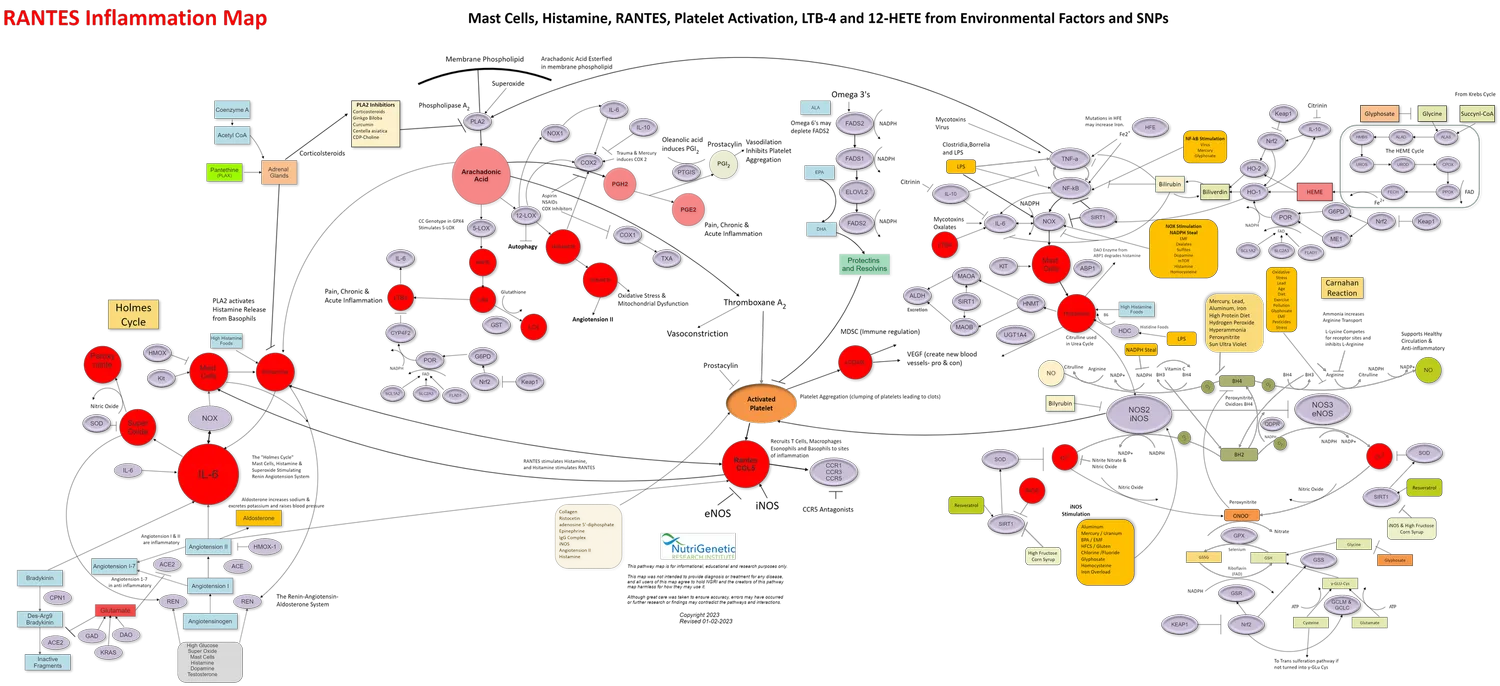
① Toxic environmental factors we have not historically encountered (at the epigenetic level) are amplified in individuals with genetic susceptibility, leading to overactivation of NOX (NADPH oxidase).
② This results in excessive production of superoxide, peroxynitrite, mast cells, histamine, and glutamate.
③ NOX enzymes consume NADPH to produce free radicals, creating what NGRI has named “NADPH Steal”—leading to insufficient NADPH to support phase I detoxification, nitric oxide synthesis, and recycling of key antioxidants such as glutathione.
④ Conversely, these NOX-generated free radicals stimulate renin, angiotensin I/II, aldosterone, IL-6, and NOX itself, forming a self-perpetuating inflammatory vicious cycle that NGRI calls the “Holmes Cycle”.
Attachment:Holmes Cycle SNPs Pathway List (PDF)
The following mechanistic hypothesis was proposed by NGRI, is pending independent research validation, and does not constitute diagnostic or therapeutic guidance.
Genetics and Chronic Lyme Disease Research (ILADS · Phase I–VIII)
NGRI’s research reports presented at ILADS (International Lyme and Associated Diseases Society) conferences in eight phases
Phase I Award-winning poster
June 2016 · ILADS 6th European Conference (Helsinki, Finland) | 192 participants | 350 genes (mitochondrial function, methylation, neurotransmitters, antioxidant defense)
Phase II
November 2016 · ILADS 17th Annual Scientific Conference (Philadelphia, USA) | 360 participants | 1,298 genes, with the 65 most differentially expressed genes identified
Phase III
May 2017 · ILADS 7th European Conference (Paris, France) | 391 participants | genes related to iron metabolism and antioxidant capacity
Phase IV
November 2017 · ILADS 18th Annual Scientific Conference (Boston, USA) | 391 participants | genes related to autophagy and mTOR | Authored by Bob Miller, CTN and Matthew Miller
Phase V
June 2018 · ILADS European Conference (Warsaw, Poland) | Sample size not noted on the original page | genes related to acetylation and lipid synthesis
Phase VI Award-winning poster
November 2018 · ILADS 2018 Annual Conference (Chicago, USA) | 421 participants | genes related to the heme pathway and mast cells
Phase VII
June 2019 · ILADS European Conference (Madrid, Spain) | 421 samples | Genes related to NAD+/NADPH synthesis and utilization
Phase VIII
2020 · ILADS Conference (location not stated on original page) | Sample size not stated on original page | Genes related to bile production
The research reports for all eight phases were presented at ILADS conferences; Phase I and Phase VI were award-winning posters (as stated on the original page: Includes Two Award Winning Posters).
The above lists the publication track record of the research reports at the ILADS annual meetings; it does not involve efficacy conclusions and is not diagnostic or treatment advice.
Research Pathway Maps
Four pathway maps publicly released by NGRI · Labels within the figures are presented as shown in the original images
RANTES An inflammatory pathway map using the chemokine RANTES as an entry point, annotating genes and metabolic steps involved in inflammatory signaling.
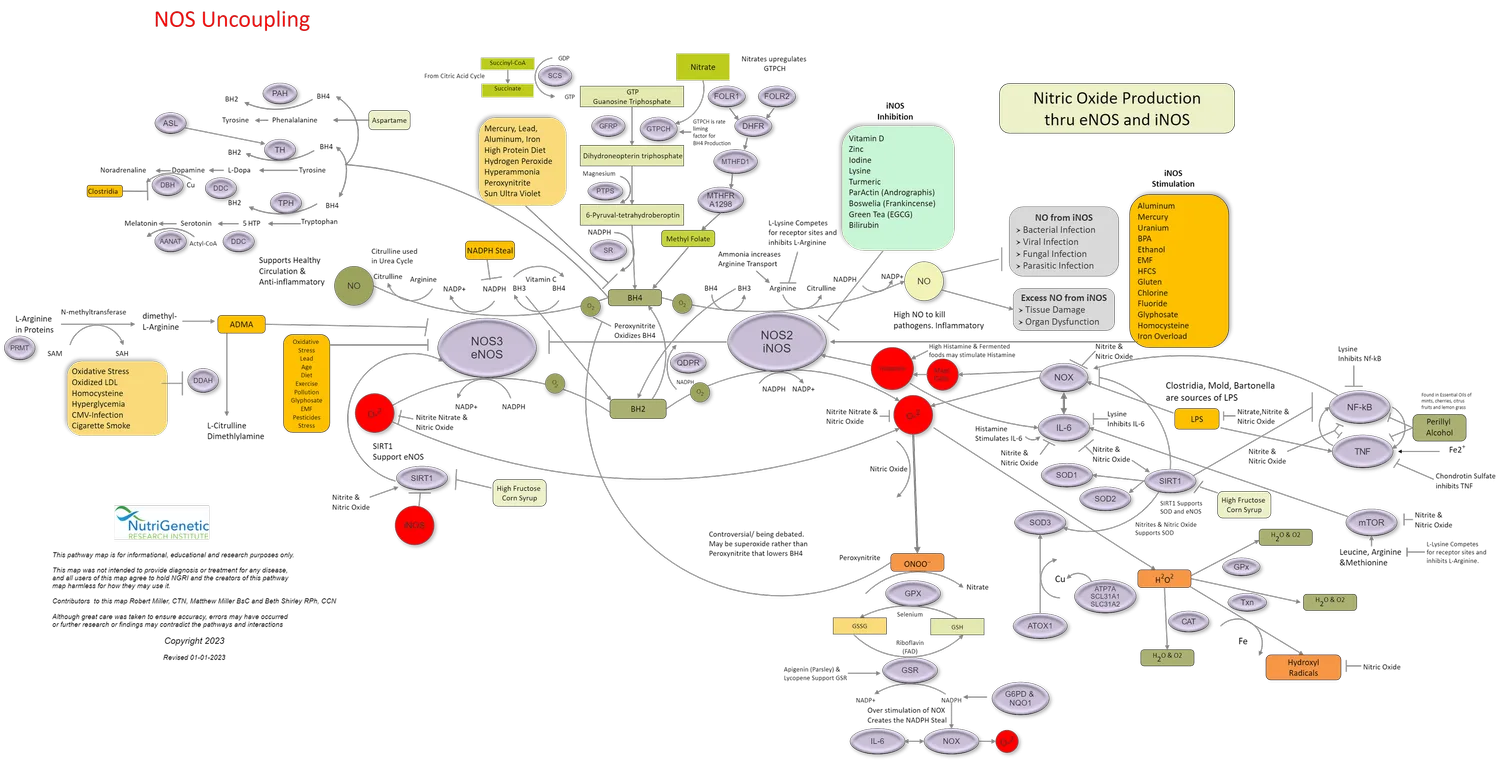
NOS Uncoupling A pathway map of nitric oxide synthase (NOS) uncoupling, annotating steps that affect nitric oxide production and oxidative stress.
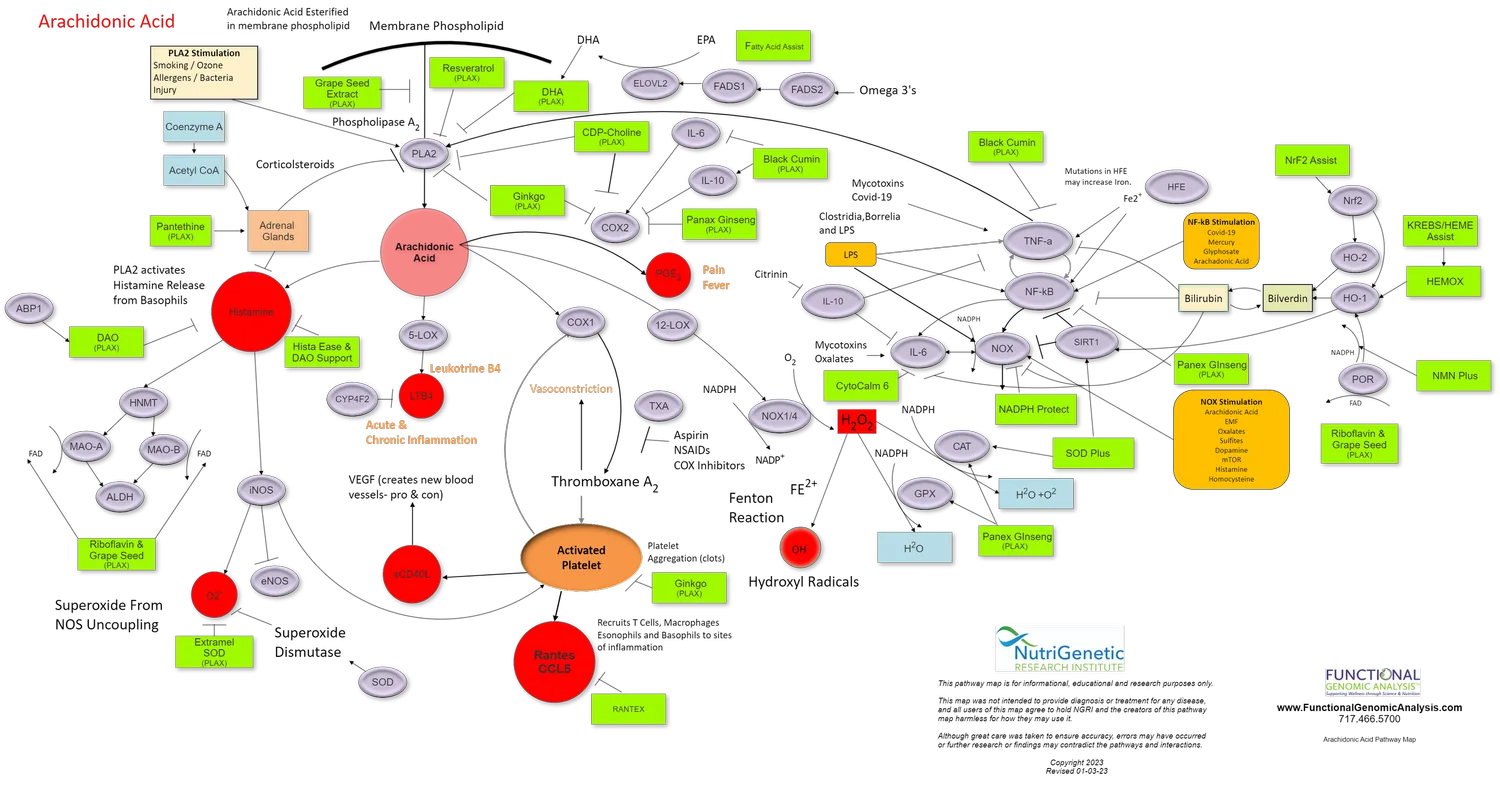
Arachidonic Acid An arachidonic acid metabolism pathway map, annotating enzymes and metabolites related to the generation of inflammatory mediators.
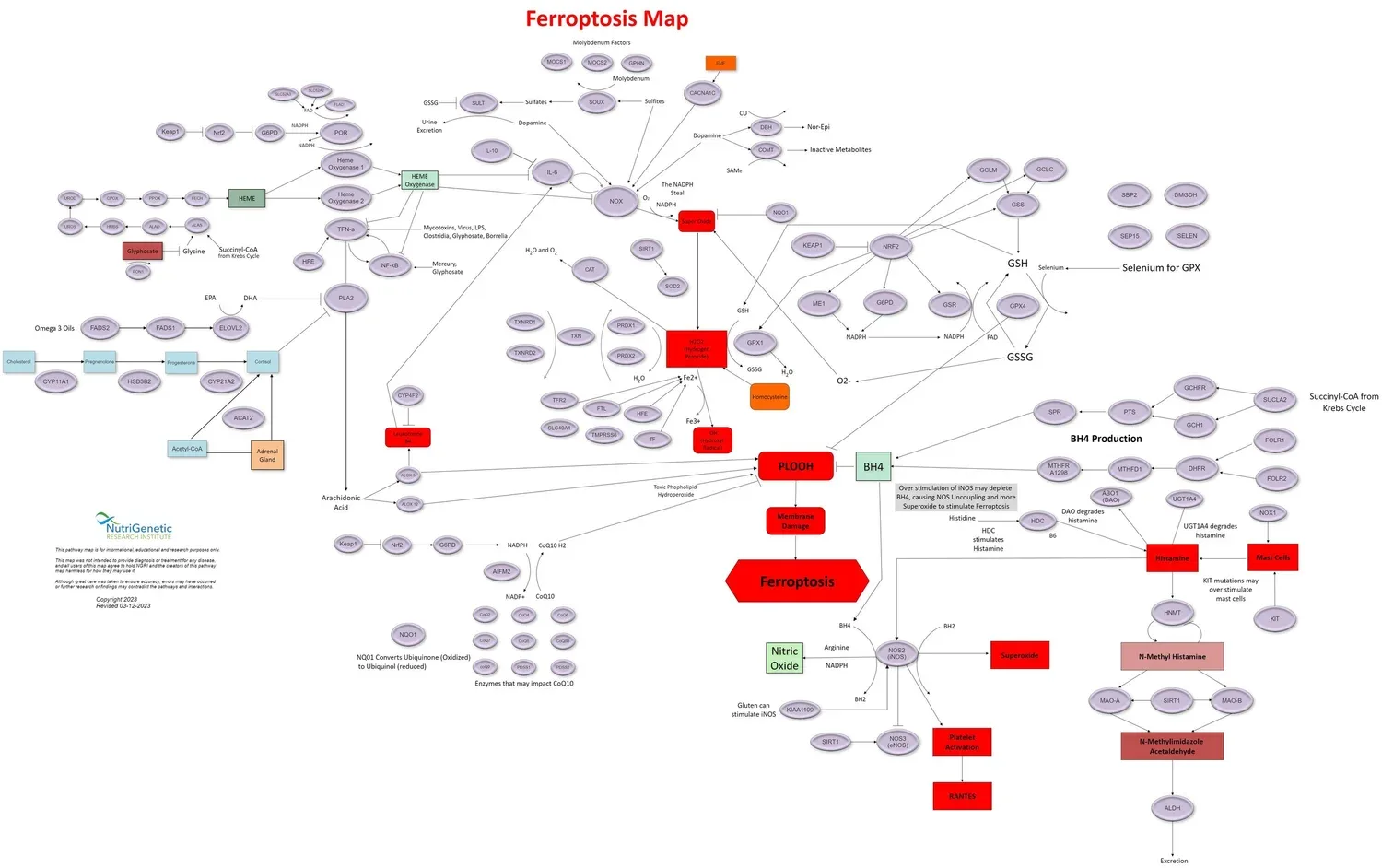
Ferroptosis A pathway map related to ferroptosis (an iron-dependent form of cell death), annotating steps related to lipid peroxidation and antioxidant defense.
© Copyright 2022 NutriGenetic Research Institute. The research materials produced by this institution are for informational purposes only and are not used to diagnose, cure, mitigate, treat, or prevent any disease. This institution does not diagnose or treat diseases; consult a licensed physician if needed.
The research generated by the NutriGenetic Research Institute is for informational purposes only and is not intended to diagnose, cure, mitigate, treat or prevent any disease.
Further Reading:Letters from Doctors · Full text on five physicians’ professional experience using FGA