Case Study: Gene-Guided Precision Nutrition Intervention Achieves Reversal of Type 2 Diabetes and Hypercholesterolemia
Introduction
Mr. Li, 63 years old, had suffered from type 2 diabetes and hypercholesterolemia for 15 years, relying on multiple medications for long-term control. After a year and a half of systematic intervention, he not only completely got rid of his medication dependence and normalized his indicators, but also achieved reversal of his metabolic diseases through the combination of lifestyle changes and precision nutrition. This case validates the significant value of the gene-guided, personalized nutritional support and phased intervention model.
Basic Information
Name:Mr. Li
Gender:Male
Age:63 years old
Chief Complaint:Palpitations, fatigue
Past Medical History:Hypercholesterolemia for 15 years, Type 2 Diabetes for 15 years
Medications:Aspirin; Three types of hypoglycemic drugs: Metformin, Linagliptin, Canagliflozin; Lipid-lowering drug: Rosuvastatin.

Initial Examination Indicators
Laboratory Results:
I. Blood Glucose Related Indicators
Fasting Blood Glucose: 8.4 ↑ (Reference Range: 3.6-6.0 mmol/L)
Glycated Hemoglobin (HbA1c): 7.2% ↑ (Reference Range: <6.0%)
II. Blood Lipids
Total Cholesterol: 3.59 mmol/L (Reference Range: 3.5–5.2 mmol/L)
Triglycerides: 1.00 mmol/L (Reference Range: ≤ 1.7 mmol/L)
High-Density Lipoprotein Cholesterol (HDL-C): 1.35 mmol/L (Reference Range: Male >1.0 mmol/L)
Low-Density Lipoprotein Cholesterol (LDL-C): 1.79 mmol/L
Total Cholesterol/HDL Ratio: 2.7
Non-High-Density Lipoprotein Cholesterol (Non-HDL-C): 2.24 mmol/L (Reference Range: ≤ 4.5 mmol/L)
Organic Acid Test Results
Gut microbiota imbalance, suboptimal mitochondrial function, suboptimal fatty acid metabolism, glutathione too low, vitamin deficiencies (Folate, B5, B2, Vitamin C), Coenzyme Q10 too low.
Analysis of Dr. Bob Miller's Project Full Functional Genomics Test Results
Test results showed 32 groups of gene variants related to high cholesterol and insulin resistance. For example: High cholesterol genes (HMGCR, PCSK9, LDLR, CYP7A1), fat metabolism (including fish oil metabolism), bile metabolism and circulation, oxidative stress, inflammatory factors and inflammasomes, energy genes, autophagy genes, liver metabolism genes and toxin accumulation, methylation regulation, and other variants.
Intervention and Outcomes: The Turning Points Across Three Phases
Phase 1 (September 2021 - April 2022)
Intervention Approach:Targeting Hypercholesterolemia
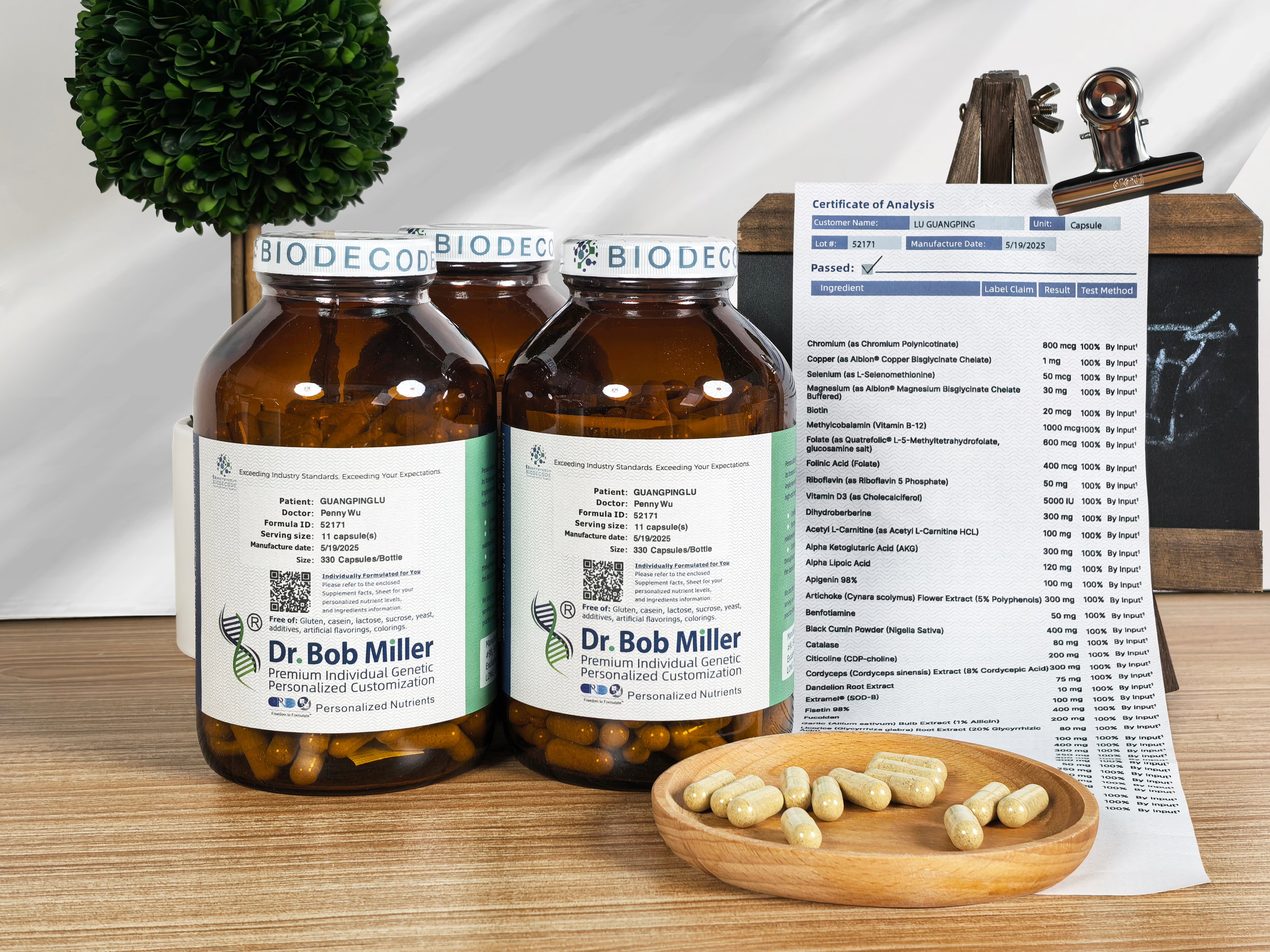
Intervention Measures:Lifestyle and dietary guidance (low-carb diet, anti-inflammatory diet), discontinuation of rosuvastatin, 1-month 5R gut restoration, 1-month liver detoxification, and PN personalized composite nutritional capsules (6 capsules each morning and evening).
Post-Phase 1 Intervention Test Results:
I. Blood Glucose Related Indicators
Fasting Blood Glucose: 8.6 ↑ (Reference Range: 3.6-6.0 mmol/L)
Glycated Hemoglobin (HbA1c): 6.7% ↑ (Reference Range: <6.0%)
II. Blood Lipids
Total Cholesterol: 5.49 mmol/L ↑ (Reference Range: 3.5–5.2 mmol/L)
Triglycerides: 1.17 mmol/L (Reference Range: ≤ 1.7 mmol/L)
High-Density Lipoprotein Cholesterol (HDL-C): 1.46 mmol/L (Reference Range: Male >1.0 mmol/L)
Low-Density Lipoprotein Cholesterol (LDL-C): 3.50 mmol/L
Total Cholesterol/HDL Ratio: 3.8
Non-High-Density Lipoprotein Cholesterol (Non-HDL-C): 4.03 mmol/L (Reference Range: ≤ 4.5 mmol/L)
Phase 1 Intervention Outcomes:In January 2022, Mr. Li underwent a follow-up physical examination. The report showed a rebound in cholesterol levels despite not taking rosuvastatin. Since rosuvastatin blocks the metabolic pathway of coenzyme Q10, combined with the patient's energy gene variation leading to insufficient myocardial energy, the associated palpitations and fatigue also improved. Cholesterol optimization indirectly aided blood glucose regulation by improving insulin sensitivity and reducing lipotoxicity damage to pancreatic β-cells. Through this synergistic effect, his HbA1c decreased from 7.2% to 6.7%.
Phase 2 (April 2022 - October 2022)
Intervention Approach:Targeting Insulin Resistance
Intervention Measures:To address the goal of reversing type 2 diabetes, an intervention plan combining lifestyle adjustments and precision nutritional support was implemented: a ketogenic diet was adopted for the first 3 months, while discontinuing glucose-lowering and antiplatelet aggregation medications such as linagliptin, canagliflozin, and aspirin. Only metformin was retained as the foundational medication. Concurrently, PN personalized composite nutritional capsules targeting insulin resistance were taken throughout the 6-month intervention period.

Post-Phase 2 Intervention Test Results:
I. Blood Glucose Related Indicators
Fasting Blood Glucose: 8.0 ↑ (Reference Range: 3.6-6.0 mmol/L)
Glycated Hemoglobin (HbA1c): 7.8% ↑ (Reference Range: <6.0%)
II. Blood Lipids
Total Cholesterol: 5.36 mmol/L ↑ (Reference Range: 3.5–5.2 mmol/L)
Triglycerides: 1.21 mmol/L (Reference Range: ≤ 1.7 mmol/L)
High-Density Lipoprotein Cholesterol (HDL-C): 1.25 mmol/L (Reference Range: Male >1.0 mmol/L)
Low-Density Lipoprotein Cholesterol (LDL-C): 3.56 mmol/L
Total Cholesterol/HDL Ratio: 4.3
Non-High-Density Lipoprotein Cholesterol (Non-HDL-C): 4.11 mmol/L (Reference Range: ≤ 4.5 mmol/L)
Intervention Outcomes:While significantly reducing hypoglycemic drugs (maintaining only metformin monotherapy), and continuing to take PN customized compound nutrients while simultaneously advancing lifestyle coaching, the patient's cholesterol levels showed a steady downward trend. However, HbA1c remained at 7.8%, and blood glucose did not improve further. This was because his dietary structure adjustment did not meet the program requirements, and the improvement in insulin resistance was insufficient, limiting the overall metabolic repair process. Therefore, it was necessary to continue planning the next 6-month phase of PN customized nutrient support, focusing on strengthening lifestyle coaching—refining the dietary implementation plan and adding an insulin resistance-targeted regulation module—to break through the current plateau and achieve synergistic improvement in blood glucose and insulin sensitivity.
Phase Three (November 2022 - May 2023)
Intervention Approach:Addressing the persistent metabolic issues such as hyperglycemia and hypercholesterolemia from the previous phases, the core strategy was multi-target synergistic intervention. Through dietary regulation, exercise intensification, functional nutritional supplementation, and metabolic pathway optimization, the root causes of metabolic disorders were ultimately repaired, achieving target indicator levels and symptom elimination.
Intervention Measures:Implemented an integrated lifestyle-nutrition-metabolism plan: Executed a low-carb diet and anti-inflammatory diet to reduce blood glucose fluctuations and suppress chronic inflammation; Exercise: Focused on muscle building to enhance metabolic reserve; Supplemented with bioactive peptides, organ-regulating pancreatic peptides, muscle-building peptides, and PN personalized nutrients adjusted for insulin resistance, targeting organ repair and improving insulin resistance; Other PN personalized nutrients: Activated autophagy, inhibited inflammasomes, optimized energy metabolism, cleared metabolic waste, and improved cellular function. The cycle lasted 6 months.
Post-Phase Three Intervention Test Results:
I. Blood Glucose Related Indicators
Fasting Blood Glucose: 5.3 (Reference Range: 3.6-6.0 mmol/L)
Glycated Hemoglobin (HbA1c): 5.9% (Reference Range: <6.0%)
II. Blood Lipids
Total Cholesterol: 5.20 mmol/L (Reference Range: 3.5–5.2 mmol/L)
Triglycerides: 1.43 mmol/L (Reference Range: ≤ 1.7 mmol/L)
High-Density Lipoprotein Cholesterol (HDL-C): 1.45 mmol/L (Reference Range: Male >1.0 mmol/L)
Low-Density Lipoprotein Cholesterol (LDL-C): 3.11 mmol/L
Total Cholesterol/HDL Ratio: 3.6
Non-High-Density Lipoprotein Cholesterol (Non-HDL-C): 3.76 mmol/L (Reference Range: ≤ 4.5 mmol/L)
Intervention Results:Reversal of Stubborn Metabolic Issues: Hyperglycemia and hypercholesterolemia indicators returned to normal—fasting blood glucose decreased from 8.4 mmol/L to 5.3 mmol/L, HbA1c decreased from 7.2% to 5.9%, cholesterol returned to 5.20 mmol/L; and symptoms such as fatigue and palpitations no longer occurred.
Case Summary and Value
After completing two years of PN customized personalized nutrient intervention tracking and analysis, the case summary focuses on efficacy verification, mechanism attribution, program value, and long-term prospects, highlighting the core role and replicability of personalized intervention.
I. Summary of Intervention Effects: Metabolic Reversal from Drug Control to Self-Stabilization
The patient's two-year precision intervention results are as follows:
Indicator Improvement:Fasting blood glucose decreased from 8.4→5.3 mmol/L, HbA1c decreased from 7.2%→5.9%, cholesterol returned to 5.20 mmol/L, all metabolic indicators fully met targets.
Symptom Relief:Palpitations and fatigue disappeared, metabolic function restored to balance.
Behavioral Habits:Adhered to muscle-building exercise and low-carb diet, maintaining a healthy state stably even after discontinuing medication.
II. Key to Success: The Precision-Adaptation-Adherence Triangle Driven by PN Customization
The core of the intervention's effectiveness benefited from the implementation of the three major advantages of the PN customized personalized nutrient plan:
Gene-Guided Precision:Comprehensive functional genomic testing identifies key variants, customizes nutrient composition and dosage, and targets genetic predispositions.
Multi-Dimensional Adaptation:Dynamically adjusts based on biomarker and metabolic testing, covering multiple pathways such as liver, gut, and energy metabolism to create synergistic effects.
High Adherence Assurance:Simplified protocols and high individual compatibility make it easier for patients to adhere long-term, ensuring stable intervention outcomes.
III. Program Value: Innovative Practice in Functional Medicine and Precision Nutrition
This case validates the feasibility of the gene testing + personalized nutrition + phased lifestyle intervention model in metabolic disease management:
Breaking Through One-Size-Fits-All Treatment Limitations:Gene-based nutrition customization directly addresses metabolic deficiencies, going beyond mere medication-based biomarker control.
Strengthening Proactive Health Capacity:Solidifying exercise and dietary habits enhances self-metabolic regulation and reduces recurrence.
Providing a New Paradigm for Chronic Metabolic Disease Management:Exploring a new model for achieving drug-free homeostasis in patients with genetically related metabolic defects.
IV. Long-Term Outlook: Consolidating Outcomes and Implications for Broader Application
Although the patient is currently off medication with normal biomarkers, two key areas require attention to maintain long-term prognosis:
Habit Reinforcement:Lifelong commitment to muscle-building exercise and a low-carb diet to prevent metabolic rebound.
Dynamic Monitoring:Re-evaluate biomarkers and nutritional status every 6–12 months, adjusting the protocol as needed.
This case provides a practical pathway for similar metabolic syndrome patients (especially those with genetic variants and medication dependence), suggesting that the integration of precision nutrition intervention and functional medicine holds promise as a key direction for future chronic metabolic disease management.
Conclusion
Through two years of systematic, personalized PN (Precision Nutrition) customized intervention, this case successfully achieved reversal of type 2 diabetes and hypercholesterolemia, along with medication reduction and cessation. It validates the significant value of gene-guided precision nutrition protocols in metabolic diseases, providing robust case support for the clinical application of functional medicine.
Core Value of the Case:After a year and a half of systematic intervention, the patient not only completely broke free from medication dependence and normalized his biomarkers but also achieved reversal of his metabolic disease through the combination of lifestyle changes and precision nutrition. Fasting blood glucose decreased from 8.4 to 5.3 mmol/L, and HbA1c decreased from 7.2% to 5.9%, validating the significant value of the gene-guided, personalized nutrition support, and phased intervention model.