Precision Intervention Case for Vitiligo
Introduction
This case report details the precision intervention process for a patient with vitiligo. At the initial consultation, the patient presented with extensive depigmentation on the arms, with clearly defined white patches and a prolonged disease course. Based on genetic polymorphism analysis, organic acid metabolic testing results, and functional medicine assessment, multiple abnormalities were identified, including insufficient oxidative stress defense, weak methylation capacity, active inflammatory pathways, gut microbiota dysbiosis, and energy metabolism dysfunction. A phased, individualized nutrition and metabolic support plan was implemented targeting these core imbalances. After 11 months, the patient achieved clinical complete repigmentation in the lesion areas, with no significant recurrence observed during follow-up.
Vitiligo is a chronic depigmentation disorder involving multiple factors. Beyond local melanocyte damage, it is often accompanied by systemic immune and metabolic homeostasis disturbances. This case suggests that identifying individual biological vulnerabilities at the functional genomics and metabolomics levels and implementing precision interventions may offer new approaches for managing chronic, refractory vitiligo.
Basic Information
Chief Complaint:Extensive depigmentation on the arms, prolonged disease course, affecting appearance.
Initial Presentation:The patient's arms showed large areas of white patches with clear borders. Local skin color was significantly faded, creating a stark contrast with the surrounding normal skin.
Changes Before and After Treatment:Before intervention, white patches on the arms were prominent with a large area of depigmentation. After 11 months of precision intervention, the skin pigment in the original lesion areas completely recovered, resulting in even skin tone, with no significant recurrence observed during follow-up.
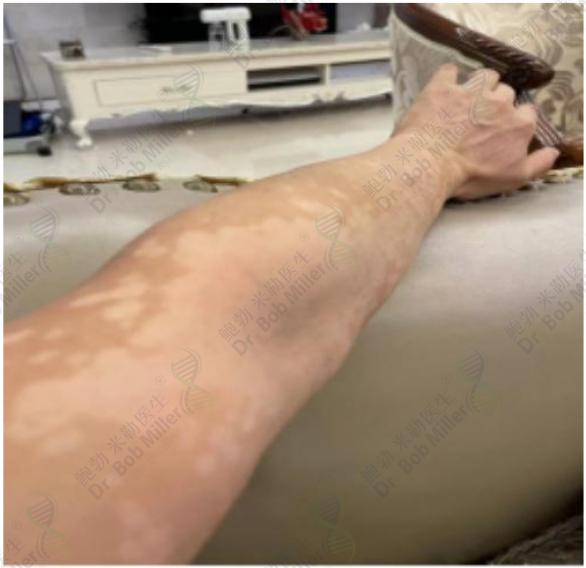
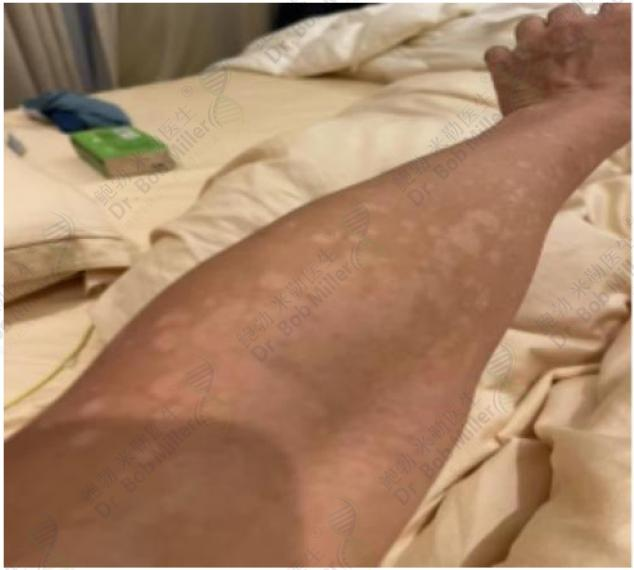
Patient Before Treatment


Patient After Treatment
I. Analysis of Organic Acid Test Results
Organic acid testing provided crucial insights for assessing the patient's metabolic imbalances, gut burden, and nutritional deficiencies. The results indicated several key issues:
1. Significant Gut Microbiota Dysbiosis with Heavy Mold and Harmful Bacterial Metabolic Burden
The organic acid results showed clear signs of overgrowth of harmful bacteria and mold in the patient. Elevated related microbial metabolites indicated a disturbed gut microecological environment, potentially leading to continuous toxin release and stimulation of the intestinal mucosa. From the perspective of the "gut-skin axis," gut dysbiosis not only affects nutrient absorption but also activates systemic inflammatory responses and disrupts immune homeostasis, thereby serving as one of the important endogenous triggers for vitiligo.
2. Insufficient Antioxidant Reserves, Indicating Elevated Oxidative Stress
The test results indicated deficiencies in glutathione-related metabolism, suggesting a weakened ability to clear free radicals and peroxides. Vitiligo patients themselves often have accumulated hydrogen peroxide around melanocytes. Insufficient glutathione further impairs cellular antioxidant capacity, making melanocytes more susceptible to oxidative damage, ultimately leading to dysfunction or even apoptosis.
3. Insufficient Methylation Nutritional Support
Organic acid analysis indicated deficiencies in key nutrients related to methylation, such as folate. Methylation is an extremely important metabolic process in the body, related to DNA repair, neurotransmitter balance, detoxification functions, and immune regulation. Folate deficiency suggests that the patient has a fundamental insufficiency in repair, detoxification, and maintaining immune homeostasis.
4. Increased Liver Detoxification Burden, Declining Metabolic Waste Processing Capacity
The test results indicated signs of elevated liver detoxification pressure in the patient, suggesting that the body's ability to metabolize and clear toxins may be insufficient. When gut-derived toxins, microbial metabolites, and endogenous metabolic waste cannot be effectively cleared, it can further exacerbate systemic inflammation and increase the burden of immune activation.
5. Extremely Low Fat Metabolism Efficiency, Affecting Fat-Soluble Nutrient Absorption
The results also indicated that the patient's fat metabolism efficiency was extremely low, possibly accompanied by bile secretion or lipid digestion and utilization disorders. Such abnormalities often affect the absorption of fat-soluble nutrients like vitamins A, D, E, and K, further weakening tissue repair capacity.
II. Dr. Bob Miller's Functional Gene Test Results
Vitiligo is not merely a skin condition; it is a manifestation of systemic metabolic and immune imbalance. In this case, the patient's genetic profile revealed the genetic vulnerabilities underlying the condition:
1. Weak Oxidative Stress and Antioxidant Defenses
Involved Pathways:Weak Nrf2 regulation, poor glutathione recycling capacity.
Clinical Significance:Nrf2 is a crucial regulatory factor in the cellular antioxidant defense system. When related pathways are weak, the body struggles to rapidly initiate effective protection against hydrogen peroxide and free radical stimulation. Insufficient glutathione system function means melanocytes are more susceptible to oxidative damage, which is highly consistent with the antioxidant reserve deficiency indicated in the organic acid results.
2. Insufficient Autophagy and Repair Capacity
Involved Pathways:Weak function of SIRT1, SIRT2, and autophagy-related genes.
Clinical Significance:Autophagy is responsible for clearing damaged mitochondria and cellular debris, while the SIRT family is involved in energy sensing, DNA repair, and anti-aging regulation. Weakness in these pathways makes it difficult for melanocytes to complete effective repair after damage, leading to a continuous decline in function or even premature apoptosis.
3. Insufficient Methylation Capacity and Histamine Clearance Impairment
Involved Pathways:Weak methylation-related genes, poor histamine metabolism capacity.
Clinical Significance:This means the patient has an inherently lower efficiency in immune regulation, neurotransmitter balance, detoxification, and inflammation control. Simultaneously, insufficient histamine clearance may exacerbate chronic inflammatory conditions in the skin and throughout the body, further disrupting immune balance.
4. Active Inflammatory Factor Pathways
Involved Pathways:IL-6-related inflammatory tendency is elevated, with a clear tendency for inflammasome activation.
Clinical Significance:The patient has a high pro-inflammatory genetic background, making them more susceptible to immune overactivation under the stimulation of gut toxins and metabolic burden, which can trigger erroneous attacks on melanocytes.
5. Energy Metabolism and Lipid Metabolic Pathways are Constrained
Involved Pathways:Abnormalities in NAD+-related metabolism, Omega-3 utilization, and bile/fat metabolism-related genes.
Clinical Significance:These variations weaken cellular energy production and repair capabilities, while also affecting the absorption and utilization of anti-inflammatory fatty acids and fat-soluble vitamins, making inflammation more difficult to subside and tissue regeneration slower.
6. Genetic Bottleneck – HLA Class 2
Vitiligo is essentially an autoimmune disease mediated by CD8+ cytotoxic T cells that specifically target and destroy epidermal melanocytes. Genome-wide association studies (GWAS) have clearly confirmed that variations in the HLA Class II region are the most core genetic drivers of vitiligo.
III. Intervention Strategy
Phase One: Gut Repair and Detoxification/Reducing Burden
Based on the 5R Gut Repair Protocol, focus on addressing gut dysbiosis, fungal burden, and intestinal barrier issues, while supporting liver metabolism to reduce sources of toxins and inflammation.
Phase Two: Precision Nutritional Support Based on Genetic Pathways
1. Methylation Support:Supplement with active folate, vitamin B12, and related methyl donors to improve methylation efficiency, supporting repair, detoxification, and immune regulation.
2. Energy and Autophagy Activation:Supplement with NAD+ precursors, combined with a SIRT support protocol; use spermidine, urolithin, etc., as core autophagy support, combined with intermittent fasting to promote the clearance of damaged cells and cellular regeneration.
3. Deep Antioxidant Intervention:Targeting weaknesses in the Nrf2 and glutathione systems, supplement with S-acetyl glutathione, alpha-lipoic acid, and an Nrf2-supporting nutritional protocol to enhance cellular antioxidant capacity and reduce melanocyte damage.
4. Inflammation Control and Immune Balance:Use high-purity, high-dose fish oil and an anti-inflammatory immune-modulating protocol to help balance Th1/Th2 responses and reduce the immune system's misdirected damage to melanocytes.
5. Bile and Lipid Metabolism Support:Continuously supplement bile salts, taurine, etc., to improve fat digestion and absorption, promote the utilization of fat-soluble nutrients, and synergistically support liver phase II detoxification.
IV. Treatment Results
After 11 months of systematic intervention, significant changes occurred in the patient's skin lesions:
- Post-treatment skin tone is even and closely matches the surrounding skin.
- No significant recurrence was observed during the follow-up period.
This result suggests that the patient's melanocyte survival environment and immune internal environment have significantly improved. The pigment recovery is not merely superficial coverage but more likely a genuine repigmentation process based on systemic metabolic repair.
V. Clinical Insights and Conclusion
This case suggests that the occurrence and development of vitiligo are often not confined solely to the local skin area but are closely related to genetic susceptibility, oxidative stress, gut microbiota dysbiosis, immune imbalance, and energy metabolism disorders.
Value of Organic Acid Testing:Revealed gut dysbiosis and mold/harmful bacterial burden; identified deficiencies in key nutrients such as glutathione and folate; indicated liver detoxification pressure and inefficient fat metabolism; provided clear direction for subsequent precision nutrition intervention.
Value of Functional Gene Testing:Further explained why the patient exhibited long-term vulnerability in these metabolic pathways and helped formulate more targeted support strategies.
Through gut repair, methylation support, antioxidant enhancement, energy metabolism improvement, autophagy activation, and immune balance regulation, the internal environment was ultimately rebuilt, creating conditions for recovery.
Conclusion:For chronic, stubborn diseases like vitiligo, if the individual etiology can be identified from both functional genomics and metabolomics dimensions, and staged precision intervention is implemented, it is possible to break through the limitations of traditional single local treatments and significantly improve clinical recovery opportunities.