Precision Rehabilitation Case After Colorectal Cancer Surgery
Introduction
This case focuses on a patient in the rehabilitation phase after colorectal cancer surgery—Mr. Chen. Although the surgery was completed, he still faced a dual high-risk situation: bilateral carotid artery atherosclerotic plaques, with the right side being a low-echo, highly rupture-prone vulnerable plaque; and a significant elevation of the tumor marker CA72-4, suggesting potential recurrence or a persistently high-risk internal environment.
While conventional treatment could partially control the indicators, it was difficult to reverse his adverse internal environment characterized by 'chronic systemic inflammation + high-risk vascular plaque'.
Based on functional medicine assessment and Bob Miller FGA comprehensive functional gene testing, we identified his key genetic predispositions in antioxidant, autophagy, inflammatory immune, and methylation pathways, and accordingly implemented a closed-loop intervention of '5R Gut Repair + Gene-Guided Precision Nutrition'.
After 14 months of precise intervention, an encouraging outcome was achieved: not only did CA72-4 levels significantly decrease, but follow-up imaging also witnessed the complete disappearance of the carotid vulnerable plaque. This suggests that elevating post-colorectal cancer surgery management to a precise functional medicine model at the 'gut–gene–vascular axis' level may provide a new integrated pathway for tumor rehabilitation and cardiovascular reversal.
Basic Information
Name:Mr. Chen
Gender:Male
Age:58 years old
Past Medical History:Rehabilitation phase after colorectal cancer surgical treatment
Core Requests:
1. Management of bilateral carotid artery atherosclerotic plaques, especially stroke risk control for vulnerable plaques.
2. Functional medicine intervention for abnormal tumor markers.
I. Initial Diagnosis and Functional Medicine Diagnosis
1. Laboratory: Tumor Markers Suggest 'Chronic Mucosal Inflammatory Storm'
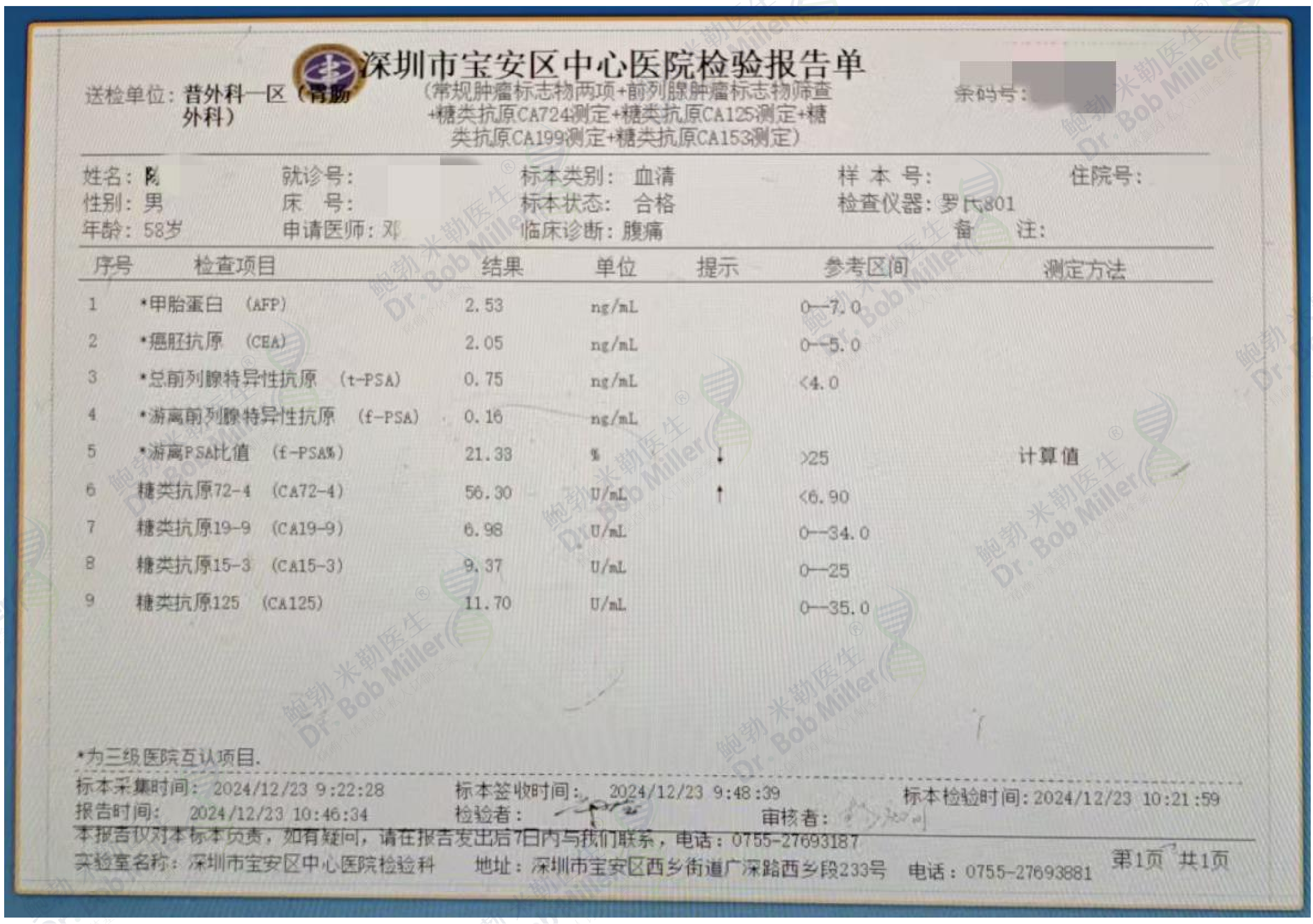
CA72-4 Initial Diagnosis: 56.30 U/mL (significantly elevated, reference value <6.90 U/mL)
Functional Medicine Interpretation:For post-colorectal cancer surgery populations, CA72-4 is not only a tumor recurrence monitoring indicator but also an important indicator reflecting gastrointestinal mucosal barrier integrity, chronic inflammation levels, and immune activation status.
The patient's persistently and significantly elevated CA72-4 suggests: impaired intestinal barrier function, high local and systemic intestinal inflammatory activity, and a dual indication of tumor recurrence and metabolic syndrome risk.
2. Imaging: Typical High-Risk 'Vulnerable Plaque' Phenotype
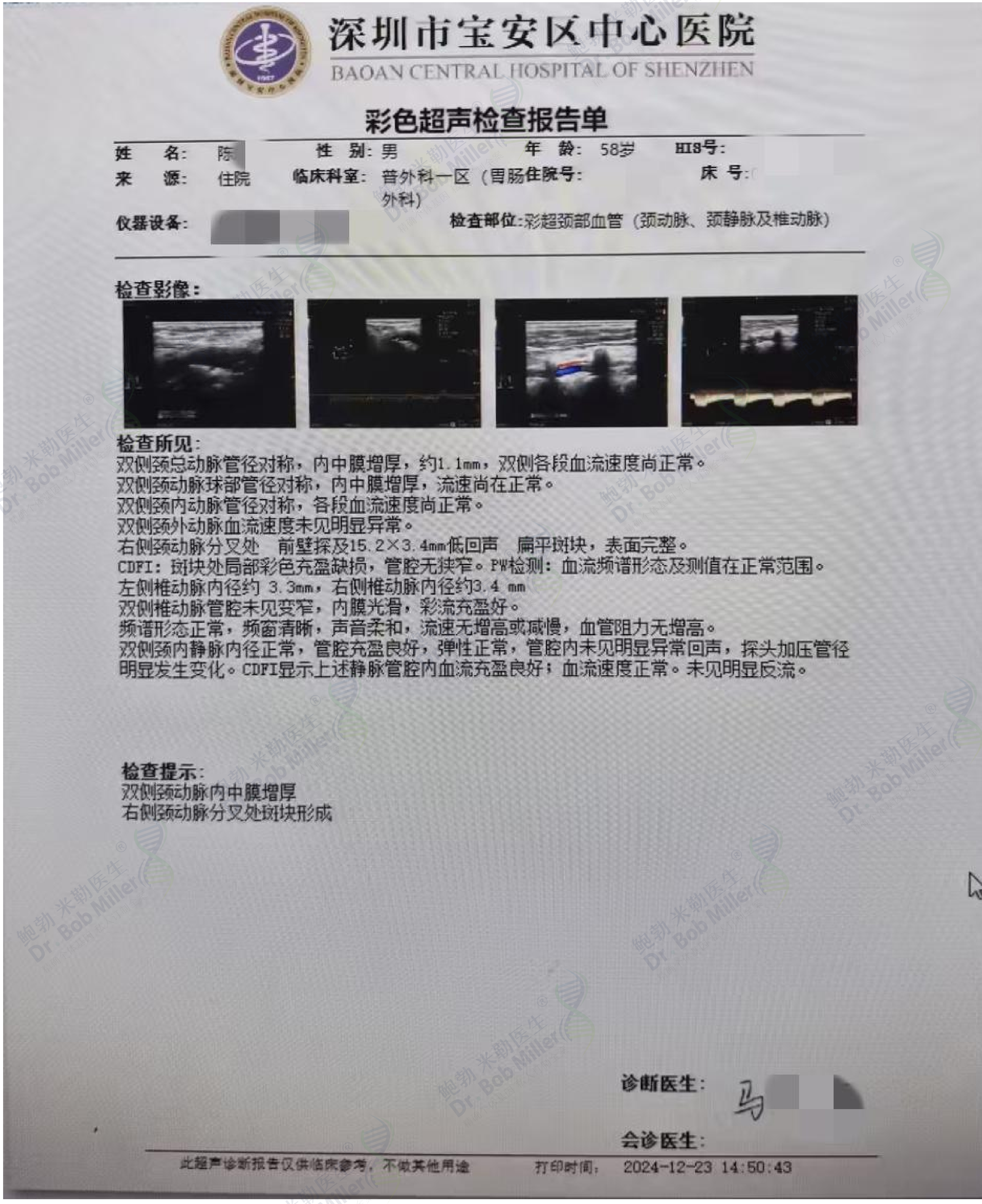
Bilateral carotid intima-media thickness (IMT) thickening, with a 15.2×3.4mm low-echo plaque visible at the right carotid bifurcation.
Risk Assessment:Low-echo plaques often indicate lipid-rich, thin fibrous cap, and active inflammation, classifying them as vulnerable plaques highly associated with high stroke risk. Mere stabilization is insufficient to meet the patient's needs.
3. Dr. Bob Miller's Functional Genomics: Identifying Metabolic Weaknesses
Through FGA functional gene testing, important SNPs variations were found in the following 5 pathways, constituting the patient's disease background of 'innate susceptibility + acquired environmental triggers'.
① Antioxidant Pathway Deficiencies (SOD2/GPX/NRF2-related)
Reduced efficiency of the superoxide dismutase and glutathione peroxidase systems.
Result:Inadequate clearance of peroxides, leading to prolonged exposure of vascular endothelium to oxidative stress and peroxynitrite (ONOO⁻) attacks, making the inflammation-immune pathway prone to activation (TNF-α/IL-6/NF-κB).
② Inflammation-Immune Pathway Susceptibility (TNF-α/IL-6/NF-κB-related)
Polymorphisms in pro-inflammatory cytokine genes enhance NF-κB signaling sensitivity.
Result:NF-κB is more easily activated and difficult to deactivate, sustaining chronic low-grade inflammation, promoting endothelial dysfunction, and accelerating atherosclerosis and inflammatory tumor microenvironment.
③ Cellular Autophagy and Scavenger System Deficiencies (RPTOR/NRF2-related)
Decreased efficiency in autophagy initiation and lysosomal clearance, impairing the garbage-clearing function in the vascular wall.
Result:Damaged proteins and oxidized LDL are not degraded in a timely manner, leading to continuous accumulation of foam cells within the vascular wall, enlargement of the necrotic core within plaques, thinning of the fibrous cap, and increased plaque vulnerability to rupture.
④ Mitochondrial and Energy Metabolism Limitations (NADSYN1/PARP-related)
Limited activity of enzymes related to NAD+ synthesis and DNA damage repair.
Result:Insufficient mitochondrial energy production, decreased ATP supply, endothelial cells 'working while impaired', repair speed lagging behind damage rate, reduced microcirculatory perfusion capacity, and increased risk of tissue ischemia-reperfusion injury.
⑤ Methylation and Homocysteine Pathway Impairments (MTHFR/MTR-related)
Obstructed one-carbon metabolism and methyl donor cycle.
Result:Abnormal DNA and RNA methylation, affecting cell proliferation and repair programs; slowed clearance of homocysteine (Hcy), leading to a tendency for elevated plasma Hcy, which concurrently increases the risk of cardiovascular events and the possibility of recurrence or metastasis after colorectal cancer surgery.
II. Intervention Strategy: Precision Targeting + Gut–Gene–Vascular Axis Closed Loop
Overall Goal:Turn off the source of inflammation (gut + NF-κB); restore autophagy and scavenger function to promote plaque regression; intervene in the fibrin network (gentle dissolution); stabilize the fibrous cap (prevent plaque detachment); bypass genetic defects through nutritional reprogramming (antioxidant + methylation); maintain a long-term low-inflammatory environment, addressing both cardiovascular and tumor risks.
1. Anti-inflammatory and Metabolic Reconstruction of Vascular Endothelium
Core Components:Longvida® Curcumin, ParActin® Andrographolide, Boswellia Extract
Key Actions:Block NF-κB from entering the nucleus, reducing inflammatory factors such as TNF-α and IL-6; downregulate endothelial adhesion molecules, reducing monocyte adhesion/infiltration, providing a low-inflammatory environment for plaque reversal.
2. Autophagy and Senescent Cell Clearance: The Plaque Reversal Engine
Key Components:Spermidine, Fisetin 98%, Apigenin 98%
Spermidine: Activates autophagy, promotes the clearance of damaged mitochondria, oxidized LDL, and cellular debris, reducing the lipid necrotic core.
Fisetin + Apigenin: Act as mild senolytics, inducing apoptosis in "zombie cells," thereby reducing inflammation within the plaque.
Expected Outcome:With inflammation suppressed, the plaque is not merely stabilized but gradually reversed and eliminated.
3. Fibrin Network Intervention (Gentle Dissolution): The "Dismantler" for Thrombus/Fibrin Networks
Key Components:Lumbrokinase, Serrapeptase, Bromelain
Lumbrokinase: Activates the fibrinolytic system, degrades fibrin, gently clears thrombus-like deposits, and reduces blood flow resistance.
Serrapeptase: Degrades inflammation-related proteins and fibrin deposits, reduces fibrosis and adhesion around the plaque, facilitating plaque remodeling and absorption.
Bromelain: Gently hydrolyzes proteins and has anti-inflammatory effects, assisting in the breakdown of micro-fibrin clots and inflammatory exudates, lowering blood viscosity, and improving microcirculation.
4. Fibrous Cap Stabilization (Preventing Plaque Rupture)
Core Components:Centella asiatica extract, which potently promotes collagen synthesis in the vascular wall, strengthening the fibrous cap.
5. Antioxidant and Methylation Pathway Support
Core Components:S-Acetyl Glutathione, Quatrefolic® Active Folate, NR, PQQ
GSH: Bypasses SOD2 limitations, directly enhances cellular reducing power, and mitigates ONOO⁻ damage to the endothelium and mitochondria.
Quatrefolic® Active Folate: Bypasses MTHFR/MTR defects, improving DNA methylation and homocysteine metabolism.
NR + PQQ: Elevates NAD+ levels, promotes mitochondrial biogenesis and repair, and enhances endothelial repair speed and resilience.
6. Gut–Gene–Vascular Axis: Cutting Off Inflammation at the Source
Sections 1–3 above represent direct, precise interventions on blood vessels and cells. This section, through the 5R Gut Repair Protocol, reduces the frequency of NF-κB activation at its source, providing a sustained low-inflammatory background for the aforementioned interventions and for the subsequent reversal of plaques.
Mechanistic Linkage:Leaky gut → LPS enters the bloodstream → activates TLR4 → NF-κB → systemic endothelial inflammation. The 5R protocol, by repairing the gut barrier and microbiota, directly reduces LPS load → creating a "low-inflammation, low-toxin" internal environment foundation for subsequent autophagy and gene-nutrition interventions.
三、治疗验证:影像与生化指标奇迹逆转!
After 14 months of precise intervention, the patient's follow-up results demonstrated a remarkable clinical value:
1. Tumor Marker: CA72-4 Significantly Decreased by 63%
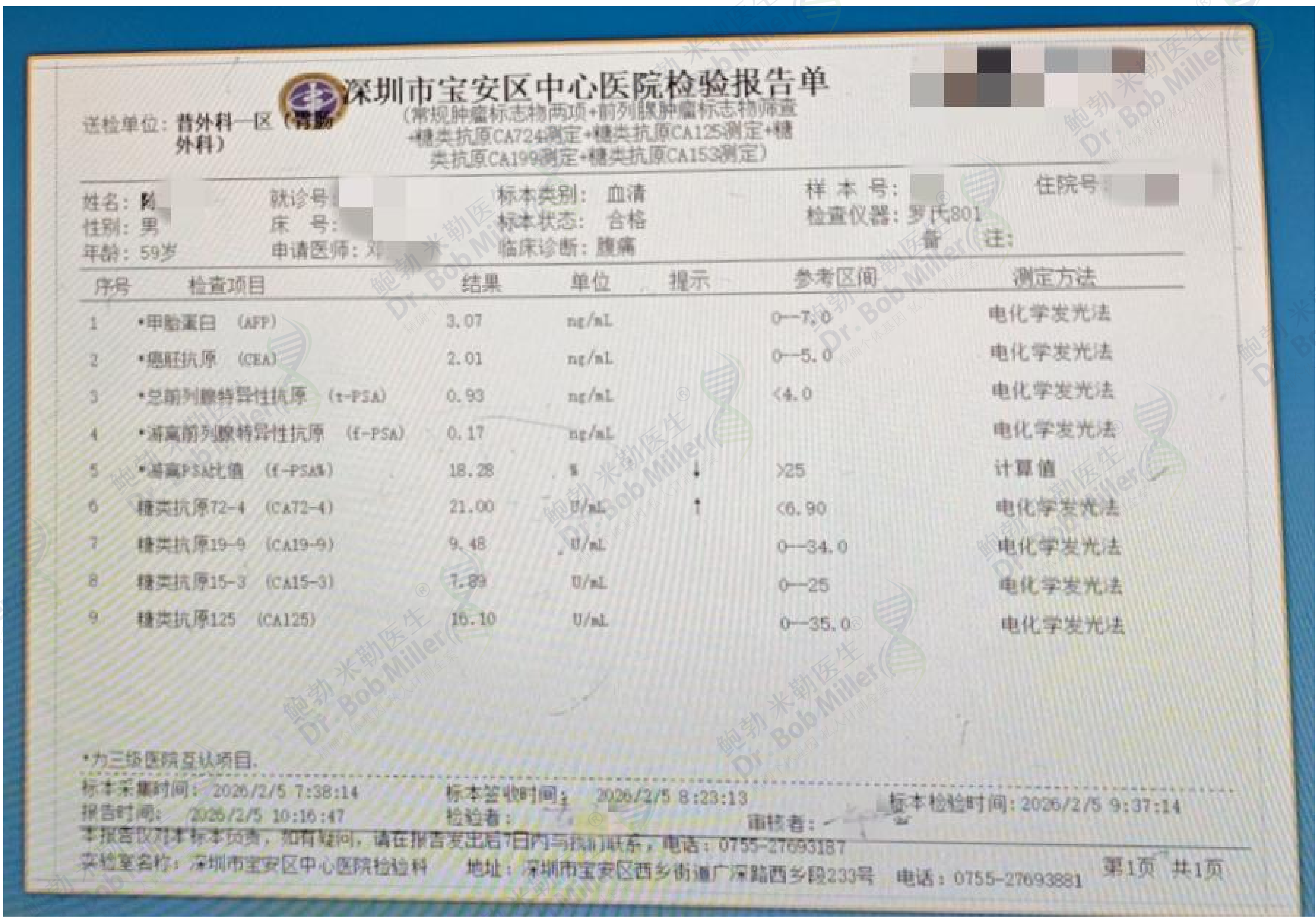
Initial Diagnosis:56.30 U/mL → Follow-up:21.00 U/mL (⬇63%)
Clinical Significance:For a post-operative colorectal cancer patient, a decrease of this magnitude indicates: a significant reduction in gastrointestinal mucosal inflammatory activity; validates the effectiveness of the 5R Gut Protocol + gene-directed nutritional intervention on the gut inflammation–tumor susceptibility axis; and provides a safer biological window for subsequent long-term tumor surveillance.
2. Carotid Ultrasound: Bilateral Plaques "Radiologically Disappeared"
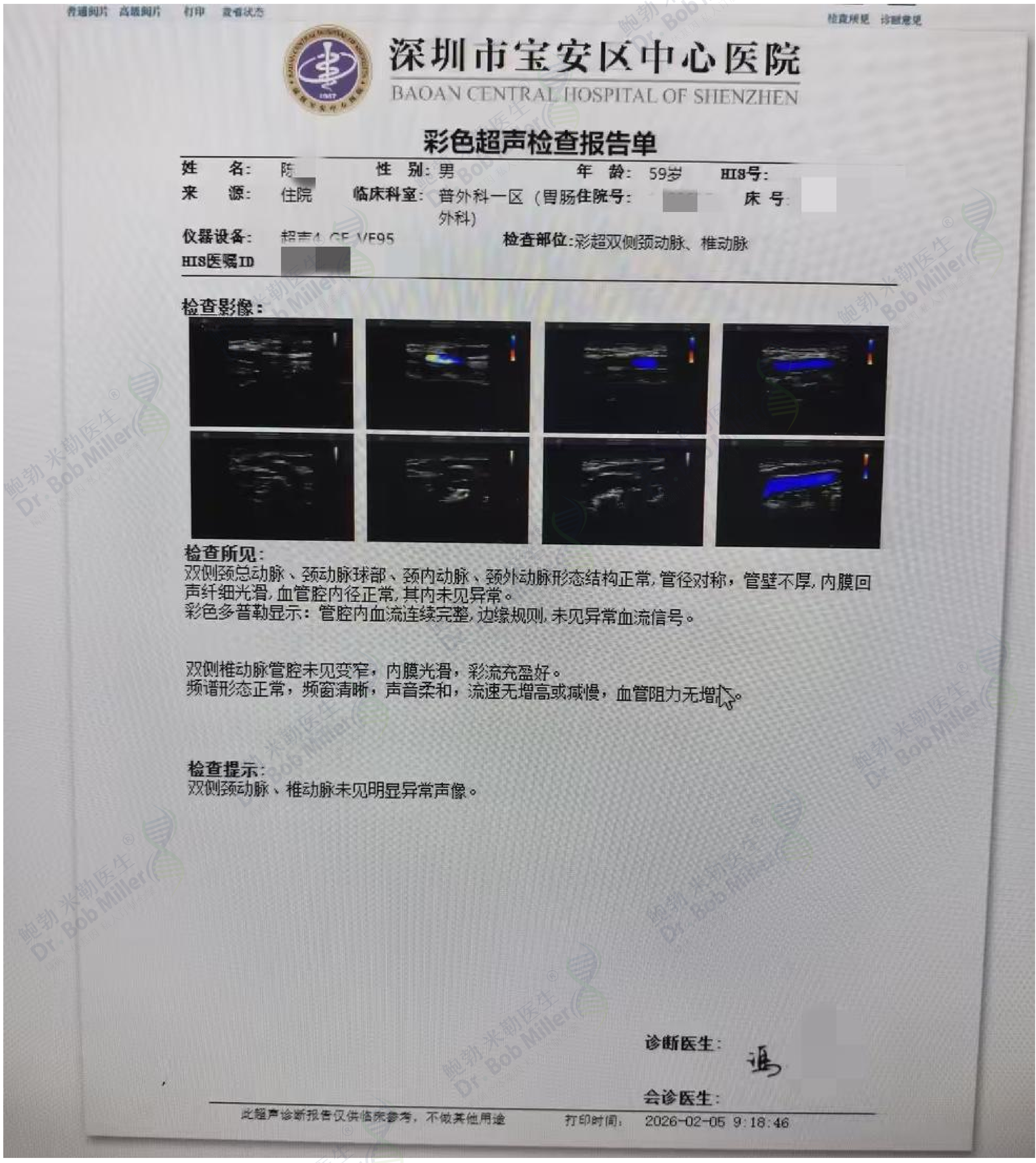
Initial Diagnosis:Right carotid bifurcation: 15.2×3.4mm hypoechoic vulnerable plaque.
Follow-up:Bilateral carotid artery walls showed regular morphology, with continuous blood flow in the lumen and no significant abnormal echoes observed. The original plaques had completely disappeared radiologically.
IV. Clinical Insights and Conclusion
1. Plaques are not irreversible.Traditional belief holds that plaques can only be stabilized with statins. However, this case demonstrates that by activating autophagy and clearing senescent cells, combined with precise nutritional support, plaques can be physiologically dismantled and absorbed by the body, a result confirmed by imaging.
2. Genes are the instruction manual, the gut is the engine.First, repair the gut and turn off the source of inflammation using the 5R Protocol; then, based on the Bob Miller FGA genetic map, provide targeted PN (Personalized Nutrition) supplementation. Stabilize the engine first, then add parts precisely according to the manual—this is how efficacy becomes sustainable and scalable.
3. The key to precision medicine: It's not about supplementing more, but supplementing right.Without considering the patient's genetic predispositions in areas like antioxidant defense and autophagy, and relying only on conventional supplementation, it would be difficult to achieve the kind of breakthrough seen in this case—significant CA72-4 reduction + complete radiological disappearance of carotid plaques. The value of precision nutrition lies in designing protocols based on pathways, genes, and the individual.
This case exemplifies a true paradigm of precision medicine:Based on genetic and functional assessment; Using Dr. Bob Miller's PN precision nutrients as tools; Designed by pathway, fine-tuned for the individual; Ensuring every nutrient has a clear mechanistic role and clinical expectation.